“How much does a website cost?” is one of the first questions every US business owner asks, and one of the hardest to get a straight answer to. One agency quotes $3,000, another quotes $40,000, and a DIY builder promises a site for $16 a month. All three can be honest, because they are describing very different products.
This guide breaks down what a business website actually costs in 2026, what drives the price up or down, and the ongoing costs most quotes leave out. By the end, you will know which budget range fits your goals and what questions to ask before you sign anything.
Quick Answer: Typical Website Costs in 2026
Prices vary by region, agency size and scope, but most US business websites fall into one of these bands:
| Website type | Typical upfront cost | Best for |
|---|---|---|
| DIY builder (Wix, Squarespace) | $0 to $500 + monthly plan | Side projects, very early startups |
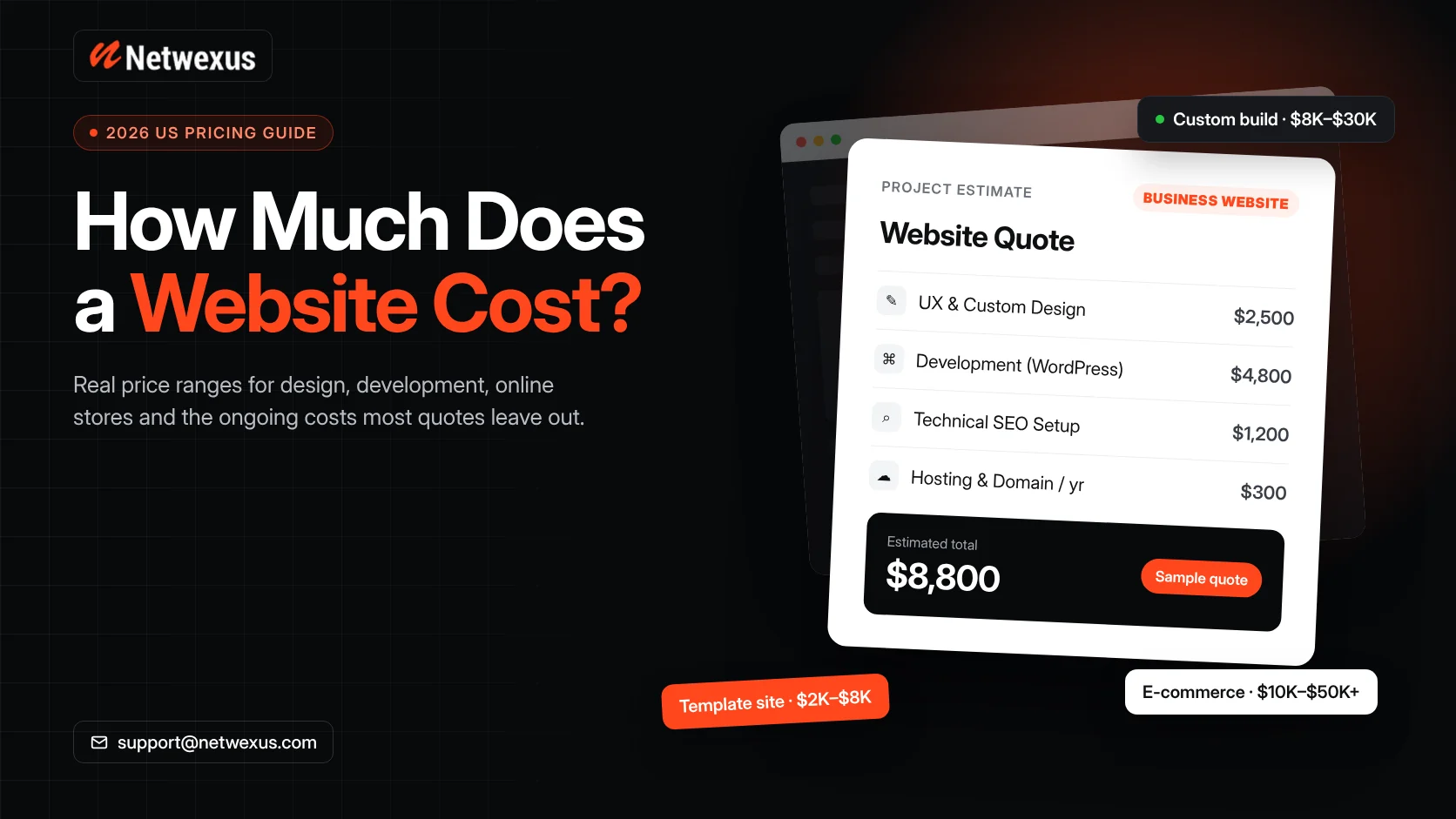
| Template-based small business site | $2,000 to $8,000 | Local service businesses with 5 to 15 pages |
| Custom-designed business website | $8,000 to $30,000 | Growing companies that compete on brand and leads |
| E-commerce store | $10,000 to $50,000+ | Brands selling products online |
| Custom web application or portal | $40,000 to $150,000+ | Booking systems, dashboards, member areas |
These are planning ranges, not quotes. The rest of this article explains why two projects that look similar on paper can land in different bands.
What Actually Drives the Price of a Website
A website price is the sum of hours spent on strategy, design, development, content and testing. Anything that adds hours adds cost.
1. Number of Pages and Templates
A five-page brochure site is very different from a 60-page site with service pages, location pages and a blog. What matters most is not the page count itself but the number of unique layouts. Ten service pages built on one strong template cost far less than ten pages that each need their own design.
2. Custom Design vs. a Theme
A pre-built theme gives you a head start, but it also gives you the same look as thousands of other sites. Custom design starts with wireframes and brand-specific layouts, which takes more time but produces a site built around your customers and your offer. If your industry is crowded, design is often where you win or lose the first impression.
3. Platform and Technology
The platform shapes both the build cost and what you pay later:
- WordPress: Flexible, owner-friendly and ideal for content-heavy business sites. See our WordPress development services.
- Shopify: Fast to launch for e-commerce, with monthly platform and app fees. Learn more about Shopify development.
- WooCommerce or Magento: More control over large catalogs and custom checkout logic.
- Laravel or a custom stack: The right choice when you need features no plugin can deliver, such as portals, quoting tools or integrations with internal systems.
4. Features and Integrations
Every feature has a price tag. Common add-ons include online booking, payment gateways, CRM integration, multi-language support, member logins, advanced search and custom calculators. A simple contact form takes minutes; a quote form that syncs with your CRM and triggers email automation can take days.
5. Content and Copywriting
Many projects stall because nobody planned for content. Professional copywriting, photography and video can add a meaningful share to the budget, but they also have a direct effect on conversions and SEO. If you supply your own content, make sure it is ready before development starts.
6. SEO Foundations
A site that looks good but cannot be found does not pay for itself. A quality build should include technical SEO basics: clean URL structure, fast load times, proper heading hierarchy, schema markup, XML sitemaps and redirects from any old URLs. Ongoing SEO services are usually priced separately.
Who Builds It Changes the Price
| Option | Cost level | Trade-offs |
|---|---|---|
| DIY website builder | Lowest | Your time is the real cost; limited SEO and design control |
| Freelancer | Low to medium | Good for small scopes; availability and long-term support vary |
| Web design agency | Medium to high | Strategy, design, development and SEO under one roof, with a process and support |
| Large enterprise agency | Highest | Built for complex organizations with long approval cycles |
The cheapest option upfront is not always the cheapest over three years. A site that needs a rebuild after 18 months, or loses rankings because redirects were skipped, often costs more in the end.
Ongoing Costs Most Quotes Leave Out
Budget for these recurring costs so your website keeps working after launch:
- Domain name: Usually $10 to $25 per year for a .com.
- Hosting: From around $10 a month for shared hosting to $100+ a month for managed or cloud hosting.
- SSL certificate: Often free with your host, but required for every modern site.
- Premium plugins, themes or apps: Annual licenses for tools like page builders, forms or SEO plugins.
- Maintenance: Updates, backups, security monitoring and small fixes. Many businesses pay a monthly care plan.
- Marketing: SEO, content and paid ads to bring visitors to the site.
How to Get an Accurate Website Quote
The more clearly you define the project, the tighter and more honest your quotes will be. Before you contact agencies, prepare:
- Your main goal: More calls, more online sales, more booked appointments or better credibility.
- A page list: Even a rough sitemap helps estimate effort.
- Must-have features: Booking, payments, integrations, logins.
- Two or three sites you like: And what specifically you like about them.
- Your timeline and budget range: Sharing a range saves time and leads to realistic proposals.
- Your current site’s URLs: So the new build protects the rankings you already have.
When comparing quotes, check what is included: number of design revisions, mobile optimization, SEO setup, training, post-launch support and who owns the site and its content.
Red Flags When Comparing Website Prices
- A fixed price given before anyone asks about your goals or pages.
- No mention of mobile design, speed or SEO.
- The agency keeps ownership of your domain, hosting account or content.
- No written scope, timeline or list of deliverables.
- Unlimited revisions promised at a very low price, which usually means corners get cut elsewhere.
Is a Cheaper Website Ever the Right Choice?
Yes. If you are testing a new business idea, a simple builder site can be the smart first step. The key is to match the investment to the job the website needs to do. If your website is expected to generate leads or sales every week, it deserves a budget that covers design, development and SEO properly.
Frequently Asked Questions
How much does a small business website cost in the US?
Most small business websites built by a professional cost between $2,000 and $8,000 for a template-based site, and $8,000 to $30,000 for a custom design. Ongoing hosting and maintenance are extra.
How long does it take to build a website?
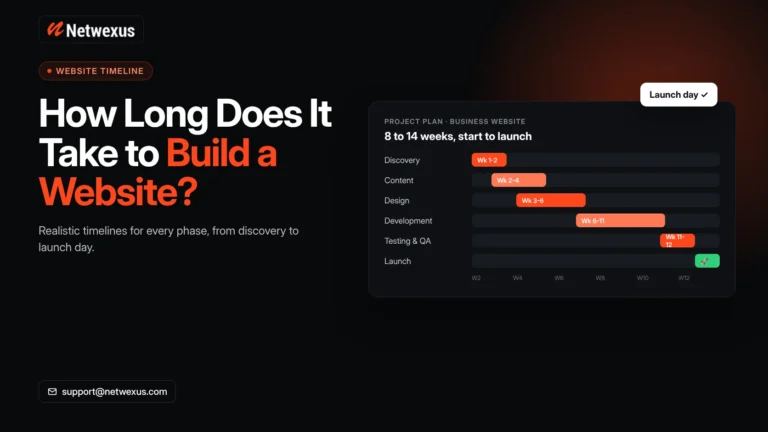
A small business site typically takes 4 to 8 weeks. Custom and e-commerce projects usually take 8 to 16 weeks, depending on content readiness and the number of revision rounds.
Is WordPress cheaper than a custom-coded website?
In most cases, yes. WordPress uses proven building blocks for common features, so you pay for customization rather than building everything from scratch.
Does the website price include SEO?
It should include technical SEO foundations such as speed, structure, metadata and redirects. Ongoing work like content, link building and local SEO is usually a separate monthly service.
Get a Clear Quote for Your Project
Every business is different, so the most useful number is the one based on your goals. Tell us what you need and we will send a quote that breaks down scope, platform and cost, with no obligation. Start with our website development services or request a free quote.