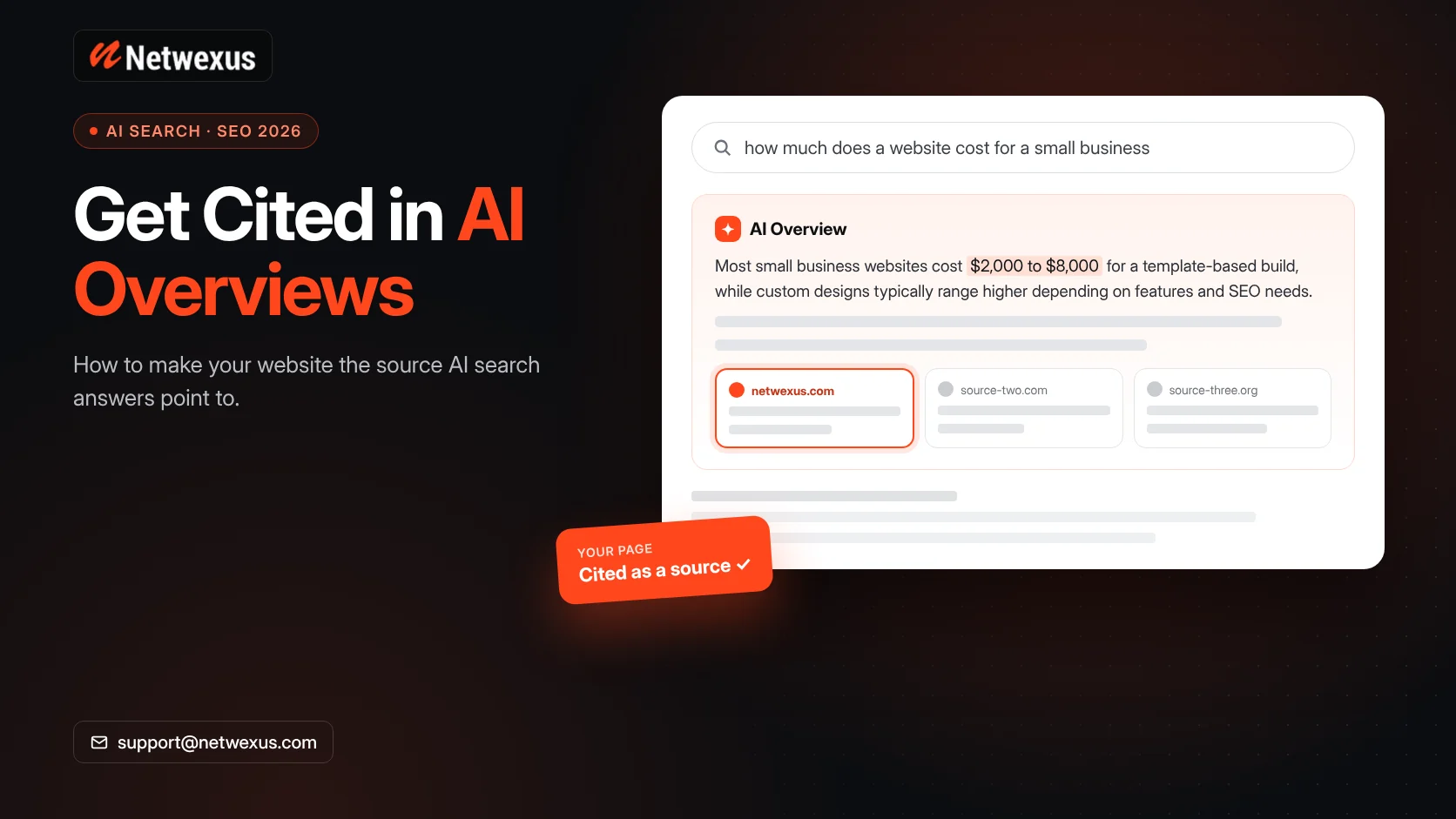
Search has changed more in the last two years than in the decade before it. Google now answers many questions with AI-generated summaries at the top of the results page, and many people get what they need without ever clicking a link. For business websites, the question is no longer only “How do I rank?” but also “How do I get mentioned in the AI answer?”
This guide explains how Google AI Overviews and AI Mode work, what the latest data says about their impact on traffic, and the practical SEO, content and website steps that improve your chances of being cited.
What Are Google AI Overviews and AI Mode?
AI Overviews are AI-generated summaries that appear above the regular search results for many queries. They pull information from several web pages and show links to the sources they used. Google has reported that AI Overviews reach more than 2.5 billion users every month.
AI Mode is a separate, conversational search experience where users can ask longer, follow-up questions and get an AI answer with source links. It works more like a chat than a list of ten blue links.
How AI Search Is Changing Website Traffic
The data paints a clear picture:
- A 2026 SparkToro study, reported by Search Engine Land, found that about 68% of US Google searches in early 2026 ended without a click, up from about 60% in 2024.
- Ahrefs research published in 2026 found that when an AI Overview appears, the top-ranking page loses a large share of its expected clicks, with an average decline of about 58%.
This does not mean SEO is dead. It means visibility now has two layers: ranking in the classic results and being cited inside AI answers. Pages that are cited still earn clicks, brand exposure and trust, often from visitors who are further along in their decision.
How Google Chooses Sources for AI Answers
Google has not published a separate rulebook for AI Overviews. Its guidance is that the same fundamentals behind good rankings apply: helpful, reliable, people-first content on pages that Google can crawl and index. In practice, cited pages tend to share these traits:
- They are indexed and eligible to show a snippet in regular search.
- They answer a specific question clearly and directly.
- They demonstrate experience and expertise on the topic.
- They come from sites that are trusted for that subject.
- Their structure makes it easy to pull out a definition, list or step.
10 Ways to Optimize Your Website for AI Overviews
1. Get the Technical Basics Right
If Google cannot crawl, render and index a page, it cannot cite it. Check that important pages are not blocked in robots.txt, are not set to noindex, return a 200 status and load quickly on mobile. A technical SEO audit is the fastest way to find hidden blockers.
2. Answer the Question in the First Lines
Start each section with a direct, one or two sentence answer, then expand with detail. AI systems and readers both benefit when the answer is not buried under a long introduction.
3. Use Question-Based Headings
Headings like “How much does a website cost?” or “What is local SEO?” mirror the way people search and ask AI tools. Use a logical H2 and H3 structure so each answer is clearly separated.
4. Use Lists, Steps and Tables
Structured formats are easy to extract and easy to read. Comparisons work well as tables, processes as numbered steps and features as bullet lists.
5. Show Real Experience
Generic content is easy for AI to summarize without citing anyone. Content with first-hand insight, original examples, real project lessons and clear authorship gives Google a reason to point to your page as the source.
6. Add Structured Data
Schema markup such as Organization, LocalBusiness, Article, Product, FAQ and Breadcrumb helps search engines understand who you are and what each page covers. It does not guarantee a citation, but it removes ambiguity.
7. Build Topic Clusters
Cover a subject in depth with a main service page supported by related articles, all linked together. For example, a local SEO page supported by guides on Google Business Profile, reviews and citations shows topical authority.
8. Keep Content Fresh and Accurate
Update statistics, prices, dates and screenshots regularly. Outdated facts are a reason for any system, human or AI, to trust another source instead.
9. Strengthen Your Brand Signals
Consistent business details, a complete Google Business Profile, genuine reviews and mentions on reputable sites all help search systems connect your brand to your topics. Off-site reputation matters as much as on-page content. Learn more about off-page SEO.
10. Make the Click Worth It
AI answers summarize; your page should go deeper. Offer what a summary cannot: calculators, templates, detailed examples, pricing breakdowns, case studies and a clear way to contact you. Visitors who click from AI answers often arrive ready to act.
How to Track AI Search Visibility
- Google Search Console: AI Overview and AI Mode activity is included in your Performance report totals. Watch impressions and clicks for question-style queries.
- Manual checks: Search your most important questions regularly and note whether your site is cited.
- SEO tools: Several rank trackers now report AI Overview appearances and citations for tracked keywords.
- Analytics: Monitor conversions from organic search, not just sessions. Fewer but better-qualified visits can still mean more leads.
What Not to Do
- Do not mass-produce thin AI-written pages; Google’s spam policies target scaled, low-value content.
- Do not stuff pages with questions and short answers that add nothing new.
- Do not block Googlebot from key content in an attempt to “protect” it, unless you accept losing that visibility.
- Do not ignore classic SEO; strong organic rankings remain the foundation for AI visibility.
Frequently Asked Questions
Can I opt out of AI Overviews?
You can limit how much of a page Google shows using snippet controls such as nosnippet or max-snippet, but these also affect regular search snippets. For most businesses, being cited is more valuable than opting out.
Do AI Overviews only cite top-ranking pages?
Many citations come from pages that already rank well, but not only from position one. Clear, well-structured answers from trusted pages can be cited even when they are not the top result.
Is SEO still worth it with AI search?
Yes. AI answers are built on web content, and the same quality, technical and authority signals that drive rankings also influence which pages are cited.
What is GEO or AEO?
Generative Engine Optimization (GEO) and Answer Engine Optimization (AEO) are newer names for optimizing content to appear in AI-generated answers. In practice, they build on the same foundations as strong SEO.
Get Your Website Ready for AI Search
Winning in AI search takes a fast, well-built website and content that genuinely answers your customers’ questions. Our team combines SEO services with website development to help US businesses stay visible as search evolves. Request a free quote to see where your site stands.