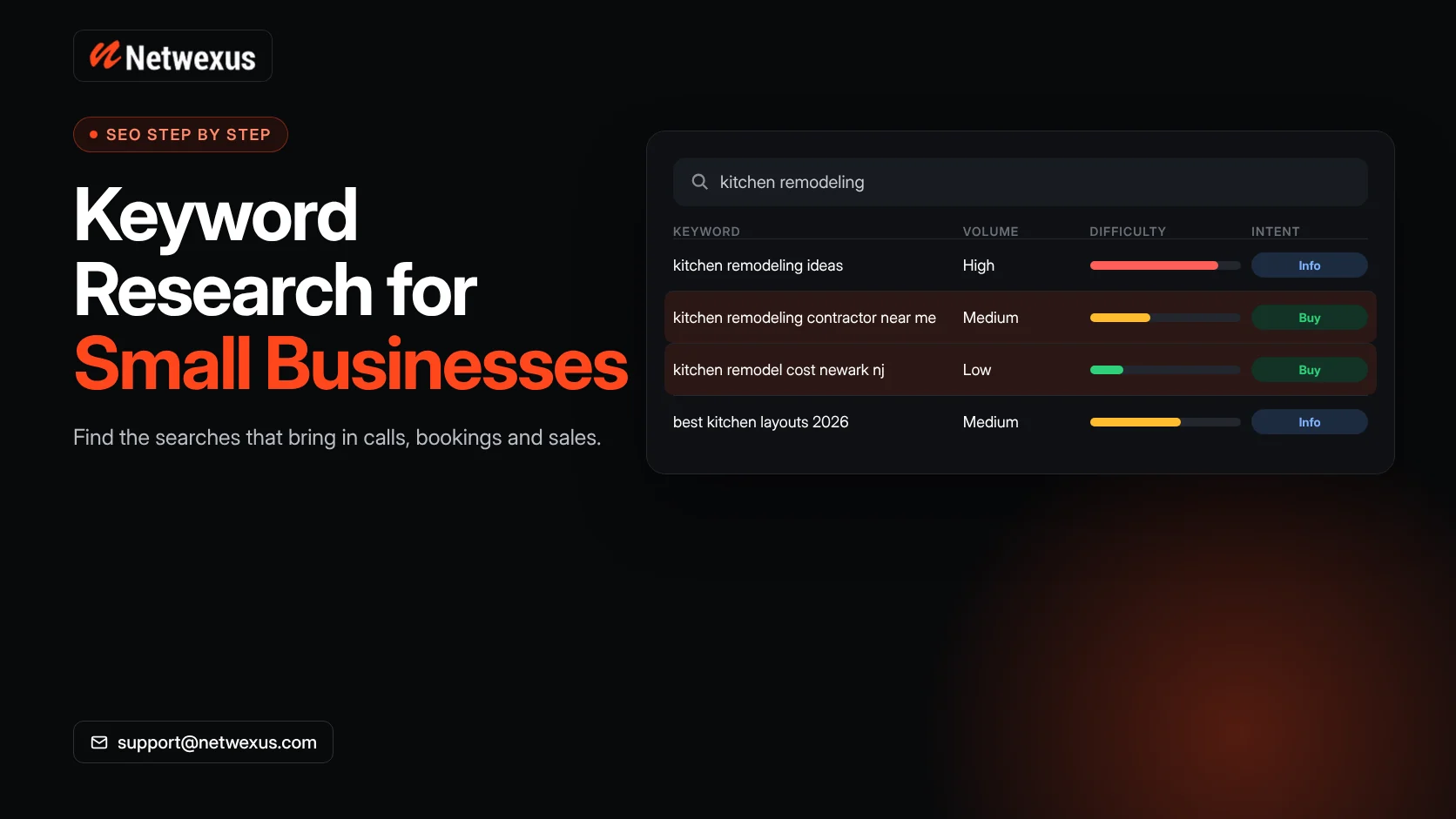
Every successful SEO strategy starts with keyword research. Before you write a page or optimize a title tag, you need to know what your customers actually type into Google, how competitive those searches are and which ones are most likely to bring in paying customers.
This step-by-step guide shows small business owners how to do keyword research in 2026, using free and paid tools, with a focus on keywords that lead to calls, bookings and sales.
What Is Keyword Research?
Keyword research is the process of finding and prioritizing the search terms people use to find products, services and answers related to your business. Good research balances three things: search volume, competition and intent.
Understand Search Intent First
| Intent type | Example search | Best page type |
|---|---|---|
| Informational | how to fix a leaking faucet | Blog post or guide |
| Commercial | best plumbing company near me reviews | Comparison or service page |
| Transactional | emergency plumber Newark NJ | Service or location page |
| Navigational | company name login | Brand page |
Small businesses usually get the fastest return from commercial and transactional keywords, because those searchers are ready to act.
Step-by-Step Keyword Research Process
Step 1: List Your Core Topics
Write down your services, products and the locations you serve. These become your seed keywords, such as “kitchen remodeling” or “dental implants”.
Step 2: Expand With Tools
Enter your seed keywords into tools such as Google Keyword Planner, Google Search Console, Semrush or Ahrefs to find related terms, questions and variations. Also use Google itself: autocomplete suggestions, “People also ask” boxes and related searches reveal real phrasing.
Step 3: Check Volume and Difficulty
Volume tells you how often a term is searched; difficulty estimates how hard it is to rank. For newer or smaller sites, lower-difficulty keywords with clear intent often win faster than big, generic terms.
Step 4: Study the Search Results
Search each important keyword and look at what ranks. Are the top results blog posts, service pages, directories or local map listings? Match your page type to what Google already rewards.
Step 5: Find Long-Tail Opportunities
Long-tail keywords are longer, more specific phrases like “affordable WordPress website for restaurants”. They have lower volume but higher intent and less competition, which makes them ideal for small businesses.
Step 6: Group Keywords by Page
Group closely related keywords that share the same intent and assign each group to one page. This prevents several of your pages from competing for the same search.
Step 7: Prioritize by Business Value
Rank your keyword groups by how likely they are to produce revenue, not just traffic. A keyword with 50 searches a month that brings in high-value clients can be worth more than one with 5,000 casual searches.
Free Keyword Research Tools
- Google Search Console: Shows the queries your site already appears for.
- Google Keyword Planner: Volume ranges and related ideas.
- Google autocomplete and People also ask: Real questions from searchers.
- Google Trends: Seasonal patterns and rising topics.
Common Keyword Research Mistakes
- Chasing high-volume keywords you cannot realistically rank for yet.
- Ignoring local modifiers like city names or “near me”.
- Targeting the same keyword on multiple pages.
- Stuffing keywords into content unnaturally, which Google’s spam policies warn against.
- Never revisiting your list as your site grows.
Turning Keywords Into Content
Once you have your groups, map them to pages: service pages for transactional terms, location pages for local searches and blog posts for informational questions. Then use each page’s main keyword naturally in the title, H1, opening paragraph and headings. Our on-page SEO services cover this mapping in detail.
Frequently Asked Questions
How many keywords should one page target?
One primary keyword plus a handful of closely related variations that share the same intent.
Do I need paid tools?
Free tools are enough to start. Paid tools add difficulty scores, competitor data and larger keyword databases.
How often should I do keyword research?
Do a full review once or twice a year and check Search Console monthly for new opportunities.
Get a Keyword Strategy Built for Your Business
We research the searches that bring in real customers and build pages to win them. Explore our SEO services or request a free quote.