“How long does SEO take?” is one of the most common questions business owners ask before investing in search. It is also one of the most important, because unrealistic expectations lead many businesses to quit just before their efforts start paying off.
This guide explains realistic SEO timelines, what happens month by month, and the factors that make results come faster or slower.
The Short Answer
Google’s own guidance on hiring an SEO notes that, in most cases, it takes four months to a year for improvements to show their full benefit. Many sites see early signs, such as more impressions and better rankings for long-tail keywords, within the first few months.
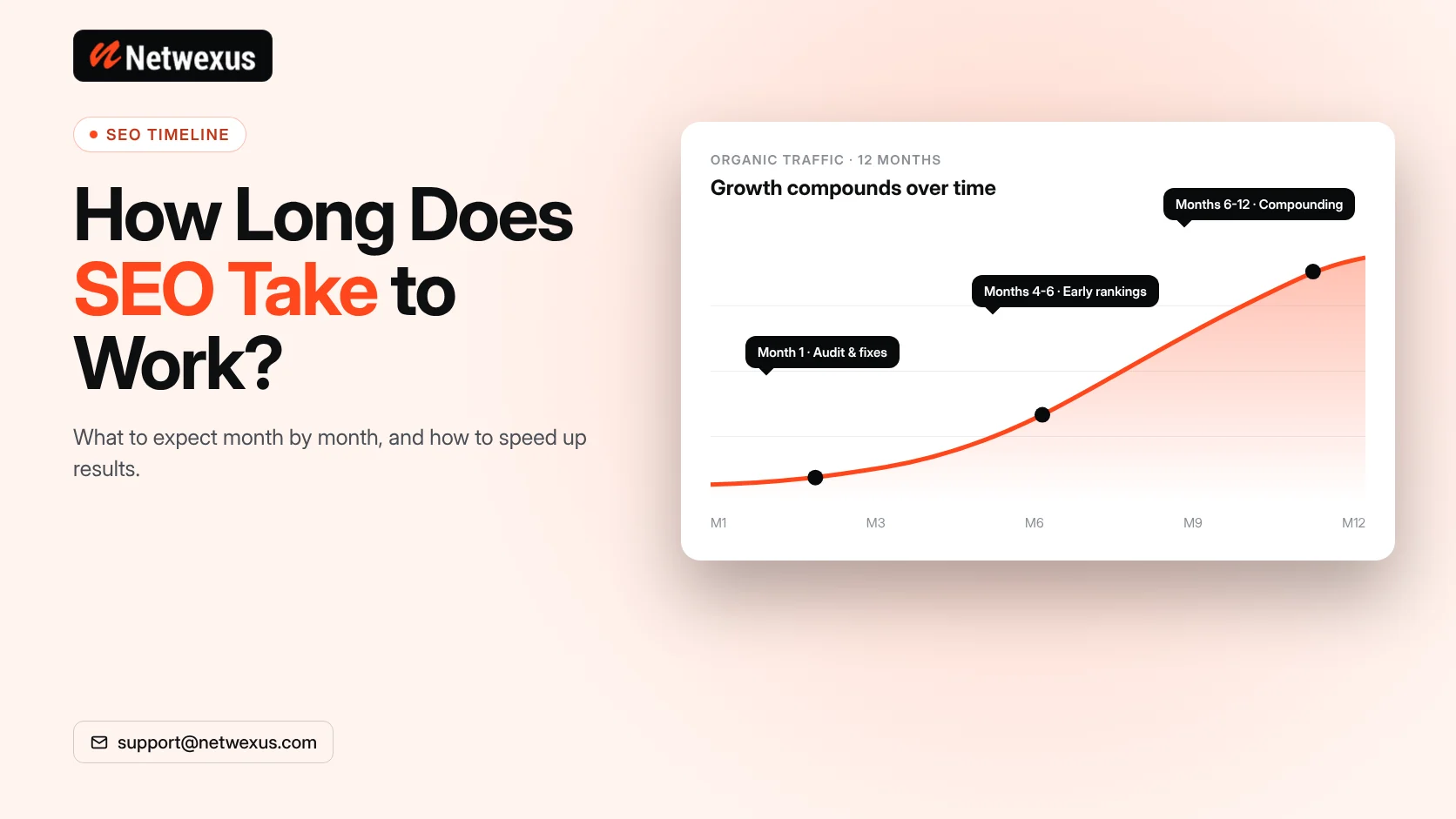
A Realistic SEO Timeline, Month by Month
Month 1: Audit and Foundations
Technical audit, keyword research, competitor review and fixes to critical issues such as indexing problems, slow pages or broken redirects. Google Analytics and Search Console are set up correctly.
Months 2 to 3: On-Page and Content
Key pages get improved titles, headings, internal links and content. New service or location pages may be published. You often see impressions rise in Search Console before clicks follow.
Months 4 to 6: Early Rankings and Traffic
Long-tail keywords start ranking, local visibility improves and organic traffic begins to grow. Content and link building continue.
Months 6 to 12: Compounding Growth
Competitive keywords move up, content earns links, and organic search becomes a reliable source of leads. This is where SEO’s long-term value becomes clear.
Factors That Affect How Fast SEO Works
- Website age and authority: Established sites with existing links usually move faster than new domains.
- Competition: Highly competitive industries and large cities take longer.
- Technical health: Sites with crawl or speed problems need fixes before content can rank. See our technical SEO services.
- Content quality and volume: Helpful, original content that matches search intent ranks faster than thin pages.
- Links and mentions: Genuine links from relevant sites build trust over time.
- Consistency: Stopping and starting resets momentum.
Why Local SEO Can Be Faster
For service-area businesses, improvements to Google Business Profile, reviews and location pages can show results sooner, sometimes within a few weeks to a few months, because local competition is often smaller than national competition. Learn more about local SEO.
How to Speed Up SEO Results
- Fix technical issues first so Google can crawl and index everything important.
- Target low-competition, high-intent keywords before broad ones.
- Improve pages that already rank on page two; they are closest to results.
- Build internal links from strong pages to the pages you want to rank.
- Collect genuine customer reviews and keep your business details consistent.
- Publish helpful content on a steady schedule.
How to Measure SEO Progress Early
Before rankings and traffic grow, watch leading indicators in Google Search Console: indexed pages, impressions, average position and the number of queries your site appears for. Rising impressions usually come before rising clicks.
Frequently Asked Questions
Can SEO show results in 30 days?
Technical fixes and local updates can show small wins quickly, but meaningful, lasting growth usually takes several months.
Why are my rankings going up and down?
Fluctuations are normal, especially for new content and during Google updates. Look at trends over weeks and months, not days.
When should I stop SEO?
SEO works best as an ongoing investment. Competitors keep publishing and earning links, so stopping completely can let your rankings slip over time.
Start Building Long-Term Visibility
The best time to start SEO is before you need the traffic. Explore our SEO services or request a free quote for a realistic plan and timeline.