Once you decide your business needs a new website, the next question is almost always the same: how long will it take? The honest answer depends on the size of the site, how much is custom, and how quickly content and feedback move between you and your web team.
This guide gives realistic website development timelines for US businesses in 2026, explains each phase of the process and shows you what speeds a project up or slows it down.
Typical Website Timelines at a Glance
| Website type | Typical timeline |
|---|---|
| Simple 5 to 10 page business site (template-based) | 3 to 6 weeks |
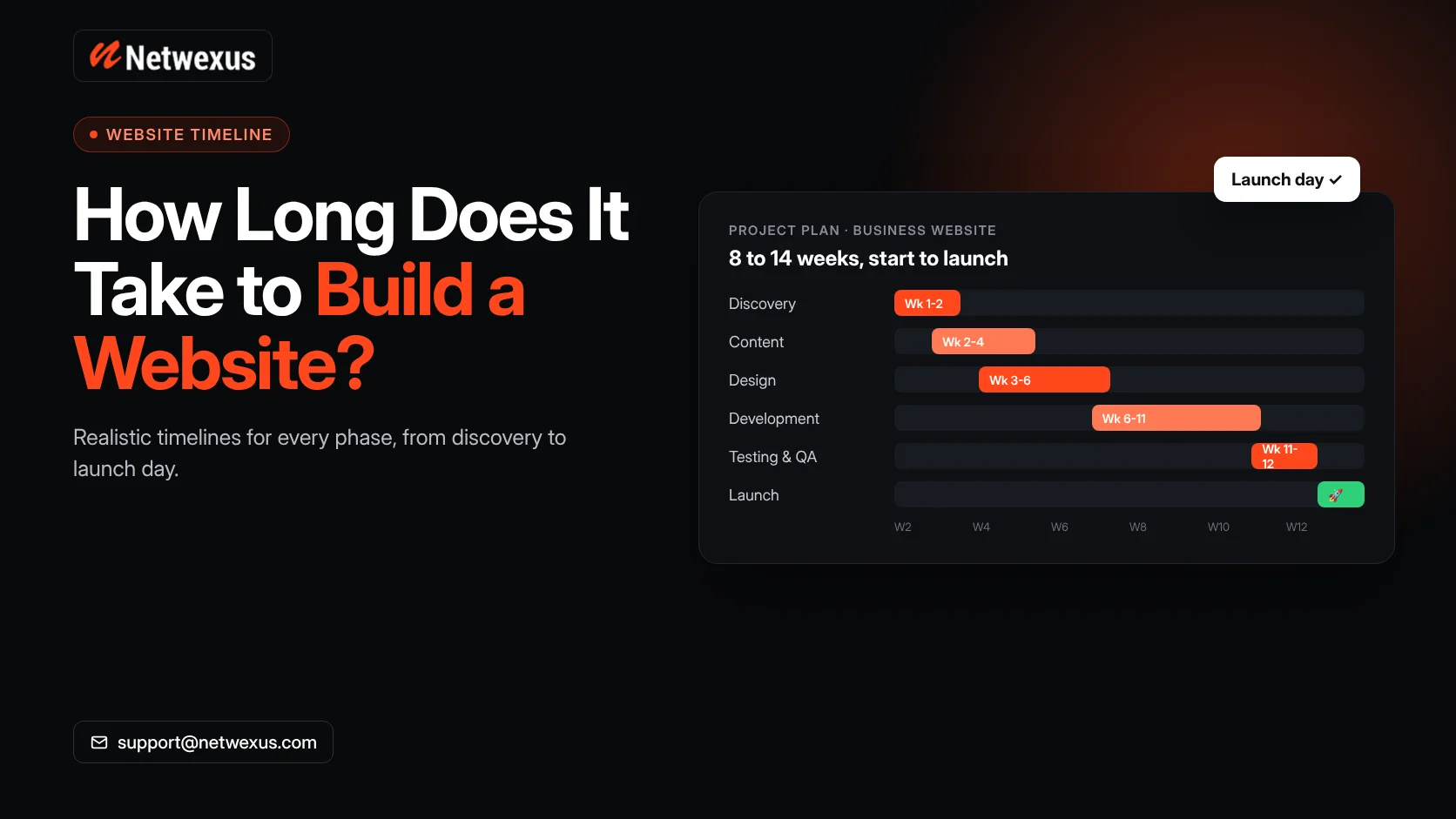
| Custom-designed business website | 8 to 14 weeks |
| E-commerce store | 10 to 16 weeks |
| Large site or web application with integrations | 4 to 9 months |
These ranges assume content and feedback arrive on schedule. In practice, the biggest delays rarely come from development itself.
The 6 Phases of a Website Project
1. Discovery and Planning (1 to 2 Weeks)
Your team defines goals, audience, page list, features and success metrics. A clear sitemap and scope at this stage prevents expensive changes later. If you are redesigning, this is also when your current URLs and rankings are audited.
2. Content Planning (1 to 3 Weeks)
Copy, photos, videos, testimonials and service details are gathered or written. Content is the most common bottleneck, so it helps to start it alongside design rather than after it.
3. Wireframes and Design (2 to 4 Weeks)
Wireframes map the layout of key pages. Once approved, designers create the visual design for desktop and mobile. Each round of revisions adds time, so consolidated feedback from one decision-maker keeps things moving.
4. Development (2 to 6 Weeks)
Developers build the templates, add content, connect forms and integrations, and set up technical SEO foundations. Platforms like WordPress speed this up for business sites; custom features take longer. Learn more about our WordPress development services.
5. Testing and Quality Assurance (1 to 2 Weeks)
The site is tested on real phones and browsers, forms and tracking are checked, page speed is tuned and every link is reviewed. Skipping QA is a false economy; problems found after launch cost more to fix.
6. Launch and Post-Launch (1 Week)
The site goes live, redirects are activated, the sitemap is submitted to Google Search Console and caching is configured. The first weeks after launch are for monitoring and small fixes.
What Slows Website Projects Down
- Late content: Pages cannot be finished without copy and images.
- Too many decision-makers: Conflicting feedback creates extra revision rounds.
- Scope creep: New features added mid-project reset parts of the timeline.
- Third-party dependencies: Access to hosting, domains, CRMs or payment accounts that arrives late.
- Unclear goals: Without agreed priorities, designs get reworked repeatedly.
How to Launch Your Website Faster
- Name one project owner on your side who collects feedback and makes final calls.
- Prepare content early, or include professional copywriting in the project.
- Share access in week one: domain registrar, hosting, analytics and any tools to integrate.
- Launch in phases. Go live with core pages first, then add the blog, extra landing pages or advanced features.
- Agree on revision rounds and response times before the project starts.
Does a Faster Build Mean a Worse Website?
Not necessarily. Speed comes from process, not shortcuts. A team with proven templates, a clear workflow and an experienced developer can deliver quickly without cutting quality. What you should avoid is skipping strategy, mobile testing or SEO setup just to hit a date. Those shortcuts usually show up later as lost leads or lost rankings.
Frequently Asked Questions
Can a business website be built in one week?
A very simple site using an existing template can go live in about a week if all content is ready. Most professional business websites take at least three to six weeks.
Why does e-commerce take longer?
Online stores need product setup, payment and shipping configuration, tax rules, inventory and more testing, all of which add time compared with a brochure site.
How long does a website redesign take?
A redesign usually takes about as long as a new build of the same size, plus time to audit existing content and map redirects so search rankings are protected.
Plan Your Website Timeline
Want a realistic timeline for your project? Share your goals and we will map out the phases, milestones and launch date. Explore our website development services or request a free quote.